Showing posts with label BMW. Show all posts

Monday, June 23, 2025

Sneak Peek at the #BMW #M4 CS #VR46 #ValentinoRossi Edition #automobile #cartok #supercars #racing


via https://www.youtube.com/watch?v=Yron3xCNAdY

The BMW M4 CS Edition VR46 is a striking blend of motorsport engineering and iconic racing heritage. Created as a tribute to MotoGP legend Valentino Rossi—now a BMW M factory driver—this exclusive edition stands out as much for its performance as for its unique design.

Rossi, often referred to simply as “The Doctor,” transitioned from two wheels to four in recent years, competing with BMW in the Fanatec GT World Challenge Europe. Driving the BMW M4 GT3 under the WRT team banner, Rossi has taken part in prestigious endurance races such as the 24 Hours of Spa, the 1000km of Paul Ricard, the Nürburgring the Nürburgring and the Le Mans 24h. 

Sunday, June 22, 2025

BMW M4 CS VR46 Valentino Rossi Edition - Full Tech Specs and Performance


via https://www.youtube.com/watch?v=KiNdiUVX2HU

BMW M4 CS VR46 Valentino Rossi Edition - Full Tech Specs and Performance 

 The BMW M4 CS Edition VR46 is a striking blend of motorsport engineering and iconic racing heritage. Created as a tribute to MotoGP legend Valentino Rossi—now a BMW M factory driver—this exclusive edition stands out as much for its performance as for its unique design. 

Rossi, often referred to simply as “The Doctor,” transitioned from two wheels to four in recent years, competing with BMW in the Fanatec GT World Challenge Europe. Driving the BMW M4 GT3 under the WRT team banner, Rossi has taken part in prestigious endurance races such as the 24 Hours of Spa, the 1000km of Paul Ricard, the Nürburgring the Nürburgring and the Le Mans 24h. 

Built on the already potent foundation of the BMW M4 CS, the VR46 edition retains the same 3.0-liter inline-6 engine with M TwinPower Turbo technology. Producing 550 horsepower and 650 Nm of torque, it propels the car from 0 to 100 km/h in just 3.4 seconds. 

Power is delivered through BMW’s xDrive all-wheel-drive system, with a rear-biased setup for sharp handling and confident traction. The 8-speed M Steptronic transmission ensures rapid gear shifts and seamless power delivery.  What sets the VR46 Edition apart are the aesthetic and symbolic elements. 

Finished in a striking São Paulo Yellow, the car features subtle number 46 insignias—a nod to Rossi’s legendary racing number. Exclusive interior detailing includes Alcantara and carbon fiber trims, with yellow contrast stitching and custom badging that reinforce its limited-run prestige. 

 The M4 CS is already a high-performance, track-capable machine, but the VR46 Edition adds a layer of identity and legacy that motorsport fans will instantly recognize. It's not just a special edition—it’s a celebration of one of racing’s most iconic figures, fused with BMW’s relentless pursuit of performance.

Sunday, June 8, 2025

2025 #LeMans 24h #Hypercars: #bmw #ferrari #porsche #toyota #alpine #cadillac #peugeot #astonmartin


via https://www.youtube.com/watch?v=jA2ZAwh096w

These are the top contenders for the 2025 24 Hours of Le Mans. 

The BMW M Hybrid V8. Built under LMDh rules, it features a 4.0-liter twin-turbo V8 paired with a standardized hybrid system. Power is electronically capped at 680 horsepower, as per class regulations. Built on a Dallara chassis, BMW joined the WEC in 2024, aiming for overall victory in 2025.

The Ferrari 499P, a factory-built LMH car. It uses a 3.0-liter twin-turbo V6 mid-mounted, coupled with a front-axle hybrid motor for all-wheel drive. Like all entries in this category, it produces a combined 680 horsepower. After winning Le Mans in 2023, Ferrari remains a key contender.

The Aston Martin Valkyrie AMR-LMH. Enter first in 2025. Based on the road-going Valkyrie, it features a high-revving 6.5-liter naturally aspirated V12 developed by Cosworth and a hybrid system. Despite the unique powertrain, total output stays within the regulated 680 horsepower limit.

Porsche 963. Runs under LMDh regulations. It uses a 4.6-liter twin-turbo V8 derived from the RS Spyder, paired with a spec hybrid system, delivering a combined 680 horsepower. The chassis is supplied by Multimatic, and the car continues Porsche’s legacy in endurance racing.

Peugeot 9X8. It’s powered by a 2.6-liter twin-turbo V6 and a front-mounted electric motor. Like its LMH rivals, it runs with 680 horsepower and all-wheel drive above 150 kilometers per hour.

Toyota’s GR010 Hybrid has been the benchmark since 2021. It features a 3.5-liter twin-turbo V6 and a front-mounted electric motor, activated above certain speeds. The hybrid system helps deliver exactly 680 horsepower, balancing reliability and performance.

The Cadillac V-Series.R, competing under LMDh rules, uses a 5.5-liter naturally aspirated V8. It’s paired with the standardized hybrid system and mounted on a Dallara chassis. Known for its durability and aggressive sound, power is limited to 680 horsepower.

The new Alpine A424 is Alpine’s first LMDh entry. It’s powered by a 3.4-liter turbocharged V6 and a spec hybrid unit, built on an Oreca chassis. Like its competitors, the A424 is tuned to the FIA-mandated 680 horsepower limit. Designed in collaboration with Signatech, it marks Alpine’s serious push for overall victory.

Le Mans 24h 2025 Hypercars - BMW Ferrari Porsche Toyota Aston Martin Alpine Cadillac Peugeot


via https://www.youtube.com/watch?v=60yOpn0fem0

The 24 Hours of Le Mans is by far the most prestigious event in endurance racing. For 2025, the Hypercar category brings together the most advanced hybrid prototypes ever developed, with entries from global manufacturers under two distinct rule sets: Le Mans Hypercar (LMH) and Le Mans Daytona h (LMDh).

These are the top contenders for the 2025 24 Hours of Le Mans, machines that represent the forefront of hybrid endurance racing technology.

The BMW M Hybrid V8. Built under LMDh rules, it features a 4.0-liter twin-turbo V8 paired with a standardized hybrid system. Power is electronically capped at 680 horsepower, as per class regulations. Built on a Dallara chassis, BMW joined the WEC in 2024, aiming for overall victory in 2025.

The Ferrari 499P, a factory-built LMH car. It uses a 3.0-liter twin-turbo V6 mid-mounted, coupled with a front-axle hybrid motor for all-wheel drive. Like all entries in this category, it produces a combined 680 horsepower. After winning Le Mans in 2023, Ferrari remains a key contender.

The Aston Martin Valkyrie AMR-LMH enters in 2025. Based on the road-going Valkyrie, it features a high-revving 6.5-liter naturally aspirated V12 developed by Cosworth and a hybrid system. Despite the unique powertrain, total output stays within the regulated 680 horsepower limit.

Porsche’s 963 runs under LMDh regulations. It uses a 4.6-liter twin-turbo V8 derived from the RS Spyder, paired with a spec hybrid system, delivering a combined 680 horsepower. The chassis is supplied by Multimatic, and the car continues Porsche’s legacy in endurance racing.

Peugeot’s 9X8 brings bold design choices, most notably a no-rear-wing aerodynamic concept. It’s powered by a 2.6-liter twin-turbo V6 and a front-mounted electric motor. Like its LMH rivals, it runs with 680 horsepower and all-wheel drive above 150 kilometers per hour.

Toyota’s GR010 Hybrid has been the benchmark since 2021. It features a 3.5-liter twin-turbo V6 and a front-mounted electric motor, activated above certain speeds. The hybrid system helps deliver exactly 680 horsepower, balancing reliability and performance.

The Cadillac V-Series.R, competing under LMDh rules, uses a 5.5-liter naturally aspirated V8. It’s paired with the standardized hybrid system and mounted on a Dallara chassis. Known for its durability and aggressive sound, power is limited to 680 horsepower.

The new Alpine A424 is Alpine’s first LMDh entry. It’s powered by a 3.4-liter turbocharged V6 and a spec hybrid unit, built on an Oreca chassis. Like its competitors, the A424 is tuned to the FIA-mandated 680 horsepower limit. Designed in collaboration with Signatech, it marks Alpine’s serious push for overall victory.

All nine of these prototypes are engineered to deliver maximum performance within tightly controlled regulations. With equalized power outputs and diverse philosophies in aerodynamics and hybrid integration, the battle for Le Mans 2025 is all to execution, efficiency and endurance. 

Wednesday, May 28, 2025

2025 #BMW #M2 CS Raw Sound #Drifting Wild on Racetrack #automobile #supercars #cartok #bimmers


via https://www.youtube.com/watch?v=8vYZTsEJOCY

2025 BMW M2 CS – Technical Specifications 

Engine and Performance
Engine: 3.0-liter BMW M TwinPower Turbo inline 6-cylinder
Power Output: 530 hp (390 kW) @ 6,250 rpm
Torque: 650 Nm (479 lb-ft) @ 2,650–5,730 rpm
Redline: 7,200 rpm
Transmission: 8-speed M Steptronic with Drivelogic (rear-wheel drive)
Acceleration (0–100 km/h / 62 mph): 3.8 seconds
Acceleration (0–100 km/h / 62 mph, 1-ft rollout): 3.5 seconds
Acceleration (0–200 km/h / 124 mph): 11.7 seconds (11.4 seconds with rollout)
80–120 km/h (50–75 mph): 3.4 seconds
Top Speed: 302 km/h (188 mph), electronically limited with M Driver’s Package

Chassis and Suspension
Platform: Based on second-generation BMW M2
Suspension: Adaptive M suspension, model-specific tuning
Ride Height: Lowered by 8 mm compared to M2
Steering: M Servotronic steering
Differential: Active M Sport differential

Braking System:
Standard: M Compound brakes with red calipers
Optional: M Carbon ceramic brakes with red calipers
Stability: DSC with M Dynamic Mode and M Traction Control

Wheels and Tyres
Wheels: Forged M light-alloy wheels (Gold Bronze matte)
Front: 19-inch, Tyres 275/35 ZR19
Rear: 20-inch, Tyres 285/30 ZR20

Weight and Construction
Weight Reduction: \~30 kg compared to standard M2
Lightweight Components: CFRP roof, hood, diffuser, boot lid, interior console
Exhaust System: M-specific system with quad matt black pipes, optional M Performance titanium silencer

Exterior Features
Aerodynamics: CFRP components, CS-specific front splitter and rear diffuser, CFRP ducktail spoiler

Interior and Technology
Seats: Heated M Carbon bucket seats with Merino leather 
Interior Trim: M Carbon Fibre, Alcantara finishes, illuminated “CS” logos
Steering Wheel: M Alcantara, flat-bottom, red centre marker, gear paddles, optional heating

Displays:
Instrument Cluster: 12.3-inch
Control Display: 14.9-inch (BMW Operating System 8.5)
  Infotainment: BMW Live Cockpit Professional with BMW Maps
  Audio: Harman Kardon Surround Sound System
  Smartphone Integration: Apple CarPlay and Android Auto
  Voice Control: BMW Intelligent Personal Assistant
  Climate Control: Two-zone automatic, digital interface

Performance Tools and Modes
Setup Button for engine, suspension, steering, brakes, and traction
M Mode TRACK
M Drift Analyser
M Laptimer

Production and Availability
Manufacturing Location: BMW Group Plant San Luis Potosí, Mexico
Market Launch: Late summer 2025
Price (Germany): €115,000

BMW M2 CS 2025 - Full Tech Specs and Performance


via https://www.youtube.com/watch?v=MJ4W6d_UNFY

The 2025 BMW M2 CS marks a new benchmark in the compact high-performance sports car segment. "CS" stands for "Competition Sport", and it represents a lighter, more powerful, and track-focused evolution of the standard BMW M2. 

The M2 CS is powered by a 3.0-liter, 6-cylinder inline engine with M TwinPower Turbo technology. It delivers 530 HP, or 390 kilowatts, which is 50 horsepower more than the base M2. Maximum torque is rated at 650 Nm, available from 2,650 to 5,730 rpm. The engine revs up to 7,200 rpm and reaches peak output at 6,250 rpm.

Power is sent to the rear wheels through a standard 8-speed M Steptronic transmission with Drivelogic. The gearbox offers three shift settings, controlled via a button on the gear selector. Manual gear changes can be made using paddles on the steering wheel or the selector lever itself.

The M2 CS is approximately 30 kilograms lighter than the standard M2. Components made from carbon-fibre-reinforced plastic—such as the roof, hood, front splitter, rear diffuser, and interior elements—contribute to this weight savings.

The M2 CS accelerates from zero to 100 kilometers per hour in 3.8 seconds. Using the 1-foot rollout method, the time drops to 3.5 seconds. It reaches 200 kilometers per hour in 11.7 seconds, or 11.4 seconds with rollout. Top speed is electronically limited to 302 kmh and includes the M Driver’s Package.

The chassis has been lowered by 8 millimeters and tuned specifically for this model. The M-specific adaptive suspension, M Servotronic steering, M Sport differential, and DSC settings are optimized for both track and road use. Braking is handled by an M Compound braking system with red calipers. M Carbon ceramic brakes are available as an option.

The M2 CS rides on forged M light-alloy wheels in a double-spoke design, with staggered sizing: 19 inches at the front, 20 inches at the rear. 

The M2 CS also benefits from an advanced exhaust system with four matte black tailpipes and electronically controlled flaps. An optional M Performance exhaust system with titanium components is also available.

Inside, the cabin features lightweight M Carbon bucket seats with Merino leather and an illuminated CS logo. The dashboard and centre console use carbon fibre trim. The Alcantara-wrapped steering wheel includes red centre marking and M buttons for custom setups.

Production of the M2 CS is limited and will take place at BMW’s San Luis Potosí plant in Mexico. Market launch is set for late summer 2025. In Germany, pricing starts at 115.000 euros. 

2025 BMW M2 CS – Technical Specifications 

Engine and Performance
Engine: 3.0-liter BMW M TwinPower Turbo inline 6-cylinder
Power Output: 530 hp (390 kW) @ 6,250 rpm
Torque: 650 Nm (479 lb-ft) @ 2,650–5,730 rpm
Redline: 7,200 rpm
Transmission: 8-speed M Steptronic with Drivelogic (rear-wheel drive)
Acceleration (0–100 km/h / 62 mph): 3.8 seconds
Acceleration (0–100 km/h / 62 mph, 1-ft rollout): 3.5 seconds
Acceleration (0–200 km/h / 124 mph): 11.7 seconds (11.4 seconds with rollout)
80–120 km/h (50–75 mph): 3.4 seconds
Top Speed: 302 km/h (188 mph), electronically limited with M Driver’s Package

Chassis and Suspension
Platform: Based on second-generation BMW M2
Suspension: Adaptive M suspension, model-specific tuning
Ride Height: Lowered by 8 mm compared to M2
Steering: M Servotronic steering
Differential: Active M Sport differential

Braking System:
Standard: M Compound brakes with red calipers
Optional: M Carbon ceramic brakes with red calipers
Stability: DSC with M Dynamic Mode and M Traction Control

Wheels and Tyres
Wheels: Forged M light-alloy wheels (Gold Bronze matte)
Front: 19-inch, Tyres 275/35 ZR19
Rear: 20-inch, Tyres 285/30 ZR20

Weight and Construction
Weight Reduction: \~30 kg compared to standard M2
Lightweight Components: CFRP roof, hood, diffuser, boot lid, interior console
Exhaust System: M-specific system with quad matt black pipes, optional M Performance titanium silencer

Exterior Features
Aerodynamics: CFRP components, CS-specific front splitter and rear diffuser, CFRP ducktail spoiler

Interior and Technology
Seats: Heated M Carbon bucket seats with Merino leather 
Interior Trim: M Carbon Fibre, Alcantara finishes, illuminated “CS” logos
Steering Wheel: M Alcantara, flat-bottom, red centre marker, gear paddles, optional heating

Displays:
Instrument Cluster: 12.3-inch
Control Display: 14.9-inch (BMW Operating System 8.5)
  Infotainment: BMW Live Cockpit Professional with BMW Maps
  Audio: Harman Kardon Surround Sound System
  Smartphone Integration: Apple CarPlay and Android Auto
  Voice Control: BMW Intelligent Personal Assistant
  Climate Control: Two-zone automatic, digital interface

Performance Tools and Modes
Setup Button for engine, suspension, steering, brakes, and traction
M Mode TRACK
M Drift Analyser
M Laptimer

Production and Availability
Manufacturing Location: BMW Group Plant San Luis Potosí, Mexico
Market Launch: Late summer 2025
Price (Germany): €115,000
Monday, May 26, 2025

BMW 507 - Full Tech Specs and Performance


via https://www.youtube.com/watch?v=O3-M8NSE3Uc

The BMW 507 was produced between 1956 and 1959.
It was a two-door roadster designed to compete with Mercedes-Benz’s 300SL.
The 507 featured an aluminum body designed by Albrecht von Goertz.
Its chassis was based on a shortened version of the BMW 503 platform.
The car was powered by a 3.2-liter OHV V8 engine, known as the BMW M507/1.
The engine produced approximately 150 to 160 horsepower at 5,000 rpm.
Torque output was rated around 235 Nm at 4,000 rpm.
It used a single overhead camshaft per cylinder bank.
The 507 had twin Solex 32NDIX carburetors for fuel delivery.
The car used a 4-speed manual transmission.
Its top speed ranged between 190 and 220 km/h depending on axle ratios.
0–100 km/h acceleration took approximately 11 seconds.
The 507 had front double wishbone suspension with torsion bars.
At the rear, it used a live axle with torsion bar springs.
Braking was handled by drum brakes on all four wheels.
The car rode on 16-inch wheels fitted with 6.00x16 tires.
Curb weight was around 1,330 kg.
The 507 had a 2400 mm wheelbase and measured 4380 mm in length.
It was equipped with a 73-liter fuel tank.
The 507 was intended primarily for the U.S. market.
It was marketed as a luxury sports car aimed at American buyers.
BMW hoped to sell over 5,000 units annually.
Due to high production costs, the retail price exceeded \$9,000.
This made it more expensive than the Mercedes-Benz 300SL.
Only 252 units of the BMW 507 were ever built.
Elvis Presley famously owned a BMW 507 during his time in Germany.
High manufacturing costs caused significant financial losses for BMW.
The 507 nearly pushed the company into bankruptcy.
Despite low sales, it had a major influence on BMW's brand image.
It laid the groundwork for future BMW roadsters like the Z3 and Z8.
Today, the 507 is considered a highly collectible classic car. 

BMW 507 Technical Specifications

Model: BMW 507
Production Years: 1956–1959
Body Style: 2-door roadster
Designer: Albrecht von Goertz
Units Produced: 252

Dimensions and Weight:
Length: 4,380 mm
Width: 1,650 mm
Height: 1,260 mm
Wheelbase: 2,480 mm
Curb Weight: approx. 1,330 kg
Fuel Tank Capacity: 73 liters

Engine:
Engine Code: BMW M507/1
Type: Naturally aspirated V8, OHV
Displacement: 3,168 cc (3.2 liters)
Bore x Stroke: 82 mm x 75 mm
Compression Ratio: 7.8:1
Power Output: 150–160 hp @ 5,000 rpm
Torque: approx. 235 Nm @ 4,000 rpm
Fuel System: Twin Solex 32NDIX carburetors
Valvetrain: OHV, 2 valves per cylinder

Performance:
Top Speed: 190–220 km/h (varies by axle ratio)
0–100 km/h Acceleration: approx. 11 seconds
Transmission: 4-speed manual

Chassis and Suspension:
Chassis: Steel ladder frame (shortened BMW 503 base)
Front Suspension: Double wishbone, torsion bars
Rear Suspension: Live axle, torsion bars
Steering: Worm and sector
Brakes: Drum brakes (front and rear)

Wheels and Tires:
Wheels: 16-inch steel
Tires: 6.00 x 16

Market and Ownership:
Primary Market: United States
Notable Owner: Elvis Presley

Sunday, May 25, 2025

The amazing #BMW Concept Speedtop Inside and Out #automobile #supercars #racing #cartok #exotic


via https://www.youtube.com/watch?v=awRwj5ybTfE

Presented at the prestigious 2025 Concorso d’Eleganza Villa d’Este, this concept reimagines the spirit of the classic BMW Touring Coupe. 

This model is slated for a small-series production.

Sculpted as a dramatic shooting brake, the Speedtop draws inspiration from the BMW Z8 and the BMW 503, blending heritage with futuristic flair.

Its long bonnet, compact cabin, and athletic rear evoke pure Gran Turismo character.

The front features a pronounced shark-nose design, with a continuous bonnet line and seamless kidney grille integration.

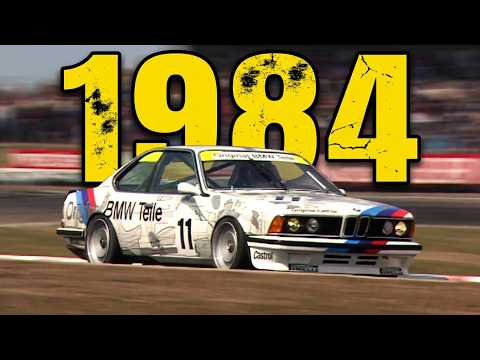
BMW 635 CSi DTM | Startup & Engine Sound at Zolder 1984

The raw sound of the legendary 1984 BMW 635 CSi Group A racing car in its first victory in the DTM at Zolder in 1984. The BMW E24 635 CS...