Showing posts with label Porsche. Show all posts

Monday, June 23, 2025

#Porsche #911 #GT3 510 HP Raw Engine Sound on Track! #supercars #cartok #racing #automobile #exotic


via https://www.youtube.com/watch?v=GiYQjfTljJE


The latest 2025 Porsche 911 GT3 992.2 generation continues with Porsche’s 4.0-litre naturally aspirated flat-six engine, screaming to a 9,000 rpm redline and delivering 510 HP and 450 Nm of torque. 

Despite tightening emissions regulations, Porsche preserves the GT3's raw, high-revving soul. 

The Weissach Package intensifies the 911 GT3’s track focus by reducing weight by around 22 kg. It uses carbon fibre for the roof, rear wing side plates, mirrors, anti-roll bars, underbody panels, and parts of the cabin. 

Optional forged magnesium wheels and a lithium-ion battery help lower the kerb weight to around 1,420 kg. A revised double-wishbone front suspension, adapted from the Porsche 911 GT3 RS, sharpens turn-in response and improves braking stability. 

Available with either a 7-speed PDK dual-clutch gearbox or a 6-speed manual, the GT3 Weissach sprints from 0–100 km/h in 3.2 seconds (PDK) or 3.7 seconds (manual), with a top speed just under 315 km/h. 

 Inside, you’ll find carbon-fibre bucket seats, Race-Tex suede-like materials, a simplified Track Screen display, and the iconic ignition rotor switch. The Weissach interior feels track-focused and premium without unnecessary frills. 

Porsche 911 GT3 Weissach Package - Technical Specification 

Engine: 4.0-litre naturally aspirated flat-six Power Output: 510 HP (375 kW) at 9,000 rpm Torque: 450 Nm Redline: 9,000 rpm Transmission: 6-speed manual or 7-speed PDK Final Drive: 8 percent shorter than previous generation (quicker acceleration)

0 to 100 km/h: 3.2 seconds (PDK), 3.7 seconds (manual) Top Speed: 311 km/h (PDK), 313 km/h (manual)

Kerb Weight: Approximately 1,420 kg (with Weissach package and magnesium wheels)

Wheels: Optional magnesium (reduces unsprung weight by approx. 4 to 9 kg)

Battery: Lightweight lithium-ion (around 4.5 kg lighter than standard)

Suspension: Double-wishbone front; revised geometry for improved stability under braking

Brakes: High-performance steel as standard; carbon-ceramic optional

Aerodynamics: Carbon-enhanced diffuser, underbody panels, and fixed rear wing

Interior: Carbon bucket seats, Race-Tex finishes, optional roll cage, Track Screen interface Ignition: Traditional rotor key

Base Price in Europe: Approximately €210,000 (varies by country)

Weissach Package Cost: Around €18,000

Optional Magnesium Wheels: Around €15,500

Porsche 911 GT3 Weissach Package - Raw Engine Sound at Ricardo Tormo Circuit Valencia


via https://www.youtube.com/watch?v=gFGORdJh5jA


The latest 2025 Porsche 911 GT3 992.2 generation continues with Porsche’s 4.0-litre naturally aspirated flat-six engine, screaming to a 9,000 rpm redline and delivering 510 HP and 450 Nm of torque. 

Despite tightening emissions regulations, Porsche preserves the GT3's raw, high-revving soul. 

The Weissach Package intensifies the 911 GT3’s track focus by reducing weight by around 22 kg. It uses carbon fibre for the roof, rear wing side plates, mirrors, anti-roll bars, underbody panels, and parts of the cabin. 

Optional forged magnesium wheels and a lithium-ion battery help lower the kerb weight to around 1,420 kg. A revised double-wishbone front suspension, adapted from the Porsche 911 GT3 RS, sharpens turn-in response and improves braking stability. 

Available with either a 7-speed PDK dual-clutch gearbox or a 6-speed manual, the GT3 Weissach sprints from 0–100 km/h in 3.2 seconds (PDK) or 3.7 seconds (manual), with a top speed just under 315 km/h. 

 Inside, you’ll find carbon-fibre bucket seats, Race-Tex suede-like materials, a simplified Track Screen display, and the iconic ignition rotor switch. The Weissach interior feels track-focused and premium without unnecessary frills. 

Porsche 911 GT3 Weissach Package - Technical Specification 

Engine: 4.0-litre naturally aspirated flat-six Power Output: 510 HP (375 kW) at 9,000 rpm Torque: 450 Nm Redline: 9,000 rpm Transmission: 6-speed manual or 7-speed PDK Final Drive: 8 percent shorter than previous generation (quicker acceleration)

0 to 100 km/h: 3.2 seconds (PDK), 3.7 seconds (manual) Top Speed: 311 km/h (PDK), 313 km/h (manual)

Kerb Weight: Approximately 1,420 kg (with Weissach package and magnesium wheels)

Wheels: Optional magnesium (reduces unsprung weight by approx. 4 to 9 kg)

Battery: Lightweight lithium-ion (around 4.5 kg lighter than standard)

Suspension: Double-wishbone front; revised geometry for improved stability under braking

Brakes: High-performance steel as standard; carbon-ceramic optional

Aerodynamics: Carbon-enhanced diffuser, underbody panels, and fixed rear wing

Interior: Carbon bucket seats, Race-Tex finishes, optional roll cage, Track Screen interface Ignition: Traditional rotor key

Base Price in Europe: Approximately €210,000 (varies by country)

Weissach Package Cost: Around €18,000

Optional Magnesium Wheels: Around €15,500
#Porsche 911 GT3 All Generations Together! #automobile #cartok #supercars #porsche911 #porsche911gt3


via https://www.youtube.com/watch?v=efoXr665g1E

Generation-by-generation an overview of all Porsche 911 GT3 models, starting from its introduction in 1999. 

The 911 GT3 is the track-focused, naturally aspirated variant of the 911 and has evolved significantly over time while retaining its motorsport DNA. 

Evolution of Porsche 911 GT3 Through All Generations (1999-2025)


via https://www.youtube.com/watch?v=6g-vNVkTlP8

Generation-by-generation an overview of all Porsche 911 GT3 models, starting from its introduction in 1999. 

The 911 GT3 is the track-focused, naturally aspirated variant of the 911 and has evolved significantly over time while retaining its motorsport DNA. 

*996 Generation (1999–2005)*

*996.1 GT3 (1999–2001)*

3.6L flat-six (Mezger engine), ~360 hp

First GT3 model; lightweight, no rear seats

*996.2 GT3 (2003–2005)*

Facelift, improved aerodynamics

Power increased to ~381 hp

*997 Generation (2006–2011)*

*997.1 GT3 (2006–2009)*

3.6L Mezger engine, 415 hp

Optional active PASM suspension

*997.1 GT3 RS (2007–2009)*

Lightweight version of GT3

Track-oriented, wider rear track

*997.2 GT3 (2010–2011)*

3.8L Mezger engine, 435 hp

Improved aerodynamics and electronics

*997.2 GT3 RS (2010–2011)*

3.8L engine, 450 hp

Lightweight, race-style improvements

*997.2 GT3 RS 4.0 (2011)*

4.0L Mezger engine, 500 hp

Final Mezger-powered 911, very limited production

*991 Generation (2013–2019)*

*991.1 GT3 (2013–2016)*

3.8L naturally aspirated flat-six, 475 hp

PDK only, first GT3 without manual option

New engine design (not Mezger)

*991.1 GT3 RS (2015–2016)*

4.0L engine, 500 hp

Wider body, magnesium roof, carbon panels

*991.2 GT3 (2017–2019)*

4.0L engine, 500 hp

Manual transmission option returns

*991.2 GT3 Touring (2017–2019)*

Same as GT3 but with a more understated appearance (no big wing)

Manual only

*991.2 GT3 RS (2018–2019)*

4.0L engine, 520 hp

Ultimate track-focused version of the 991 GT3

*992 Generation (2021–Present)*

*992 GT3 (2021–present)*

4.0L engine, 502 hp

New double-wishbone front suspension

Available with PDK or 6-speed manual

*992 GT3 Touring (2021–present)*

GT3 with more subdued styling

No rear wing, manual or PDK

*992 GT3 RS (2022–present)*

4.0L engine, 518 hp

Radical aero, DRS-style adjustable wing

Track-focused, highly configurable

Sunday, June 8, 2025

2025 #LeMans 24h #Hypercars: #bmw #ferrari #porsche #toyota #alpine #cadillac #peugeot #astonmartin


via https://www.youtube.com/watch?v=jA2ZAwh096w

These are the top contenders for the 2025 24 Hours of Le Mans. 

The BMW M Hybrid V8. Built under LMDh rules, it features a 4.0-liter twin-turbo V8 paired with a standardized hybrid system. Power is electronically capped at 680 horsepower, as per class regulations. Built on a Dallara chassis, BMW joined the WEC in 2024, aiming for overall victory in 2025.

The Ferrari 499P, a factory-built LMH car. It uses a 3.0-liter twin-turbo V6 mid-mounted, coupled with a front-axle hybrid motor for all-wheel drive. Like all entries in this category, it produces a combined 680 horsepower. After winning Le Mans in 2023, Ferrari remains a key contender.

The Aston Martin Valkyrie AMR-LMH. Enter first in 2025. Based on the road-going Valkyrie, it features a high-revving 6.5-liter naturally aspirated V12 developed by Cosworth and a hybrid system. Despite the unique powertrain, total output stays within the regulated 680 horsepower limit.

Porsche 963. Runs under LMDh regulations. It uses a 4.6-liter twin-turbo V8 derived from the RS Spyder, paired with a spec hybrid system, delivering a combined 680 horsepower. The chassis is supplied by Multimatic, and the car continues Porsche’s legacy in endurance racing.

Peugeot 9X8. It’s powered by a 2.6-liter twin-turbo V6 and a front-mounted electric motor. Like its LMH rivals, it runs with 680 horsepower and all-wheel drive above 150 kilometers per hour.

Toyota’s GR010 Hybrid has been the benchmark since 2021. It features a 3.5-liter twin-turbo V6 and a front-mounted electric motor, activated above certain speeds. The hybrid system helps deliver exactly 680 horsepower, balancing reliability and performance.

The Cadillac V-Series.R, competing under LMDh rules, uses a 5.5-liter naturally aspirated V8. It’s paired with the standardized hybrid system and mounted on a Dallara chassis. Known for its durability and aggressive sound, power is limited to 680 horsepower.

The new Alpine A424 is Alpine’s first LMDh entry. It’s powered by a 3.4-liter turbocharged V6 and a spec hybrid unit, built on an Oreca chassis. Like its competitors, the A424 is tuned to the FIA-mandated 680 horsepower limit. Designed in collaboration with Signatech, it marks Alpine’s serious push for overall victory.

Le Mans 24h 2025 Hypercars - BMW Ferrari Porsche Toyota Aston Martin Alpine Cadillac Peugeot


via https://www.youtube.com/watch?v=60yOpn0fem0

The 24 Hours of Le Mans is by far the most prestigious event in endurance racing. For 2025, the Hypercar category brings together the most advanced hybrid prototypes ever developed, with entries from global manufacturers under two distinct rule sets: Le Mans Hypercar (LMH) and Le Mans Daytona h (LMDh).

These are the top contenders for the 2025 24 Hours of Le Mans, machines that represent the forefront of hybrid endurance racing technology.

The BMW M Hybrid V8. Built under LMDh rules, it features a 4.0-liter twin-turbo V8 paired with a standardized hybrid system. Power is electronically capped at 680 horsepower, as per class regulations. Built on a Dallara chassis, BMW joined the WEC in 2024, aiming for overall victory in 2025.

The Ferrari 499P, a factory-built LMH car. It uses a 3.0-liter twin-turbo V6 mid-mounted, coupled with a front-axle hybrid motor for all-wheel drive. Like all entries in this category, it produces a combined 680 horsepower. After winning Le Mans in 2023, Ferrari remains a key contender.

The Aston Martin Valkyrie AMR-LMH enters in 2025. Based on the road-going Valkyrie, it features a high-revving 6.5-liter naturally aspirated V12 developed by Cosworth and a hybrid system. Despite the unique powertrain, total output stays within the regulated 680 horsepower limit.

Porsche’s 963 runs under LMDh regulations. It uses a 4.6-liter twin-turbo V8 derived from the RS Spyder, paired with a spec hybrid system, delivering a combined 680 horsepower. The chassis is supplied by Multimatic, and the car continues Porsche’s legacy in endurance racing.

Peugeot’s 9X8 brings bold design choices, most notably a no-rear-wing aerodynamic concept. It’s powered by a 2.6-liter twin-turbo V6 and a front-mounted electric motor. Like its LMH rivals, it runs with 680 horsepower and all-wheel drive above 150 kilometers per hour.

Toyota’s GR010 Hybrid has been the benchmark since 2021. It features a 3.5-liter twin-turbo V6 and a front-mounted electric motor, activated above certain speeds. The hybrid system helps deliver exactly 680 horsepower, balancing reliability and performance.

The Cadillac V-Series.R, competing under LMDh rules, uses a 5.5-liter naturally aspirated V8. It’s paired with the standardized hybrid system and mounted on a Dallara chassis. Known for its durability and aggressive sound, power is limited to 680 horsepower.

The new Alpine A424 is Alpine’s first LMDh entry. It’s powered by a 3.4-liter turbocharged V6 and a spec hybrid unit, built on an Oreca chassis. Like its competitors, the A424 is tuned to the FIA-mandated 680 horsepower limit. Designed in collaboration with Signatech, it marks Alpine’s serious push for overall victory.

All nine of these prototypes are engineered to deliver maximum performance within tightly controlled regulations. With equalized power outputs and diverse philosophies in aerodynamics and hybrid integration, the battle for Le Mans 2025 is all to execution, efficiency and endurance. 

Friday, June 6, 2025

#Porsche 963 RSP, the racer has been made road legal! #automobile #supercars #exotic #cartok


via https://www.youtube.com/watch?v=9uONkLGHGTI

Porsche 963 RSP – Technical Specifications 

Model name: Porsche 963 RSP
Type: Road-legal high-performance prototype
Chassis: Carbon-fiber monocoque (LMP2-based, by Multimatic)
Length: 5100 mm
Width: 2000 mm
Height: 1060 mm
Wheelbase: 3148 mm
Weight: Approximately 1030 kg

Engine type: Twin-turbocharged 4.6-liter V8
Engine code: 9RD (derived from Porsche 918 Spyder)
Max engine power: Over 515 kW (approximately 700 PS)
Max RPM: Over 8000 rpm
Turbo boost: Approximately 0.3 bar (2 turbos)

Hybrid system: Bosch MGU with 1.35 kWh battery from Williams
Total combined power output: 520 kW (707 PS, regulated)
Drive system: Rear-wheel drive
Transmission: 7-speed Xtrac sequential gearbox
Clutch: Carbon-fiber racing clutch

Top speed: Over 330 km/h
Suspension: Pushrod double wishbone with adjustable dampers
Brakes: Carbon racing brakes with regenerative hybrid system
Wheels: 18–19 inch race wheels adapted for road use

Fuel type: Synthetic or biofuel compatible
Emissions: Modified for street approval
Street modifications: Lighting, mirrors, exhaust system, license plate mounts

Interior: Stripped-down, race-focused with minimal comfort features
Production: One-off road-legal concept 

Porsche 963 RSP (Road Legal) - Full Tech Specs and Performance


via https://www.youtube.com/watch?v=hBUspUCwuNU

At the 2025 24 Hours of Le Mans, Porsche unveiled a unique one-off vehicle: the Porsche 963 RSP. Developed as a tribute to the legendary 917 and inspired by Count Rossi’s 1975 street-driven prototype, the 963 RSP is based on Porsche’s LMDh competition car but reimagined for public roads under special conditions.

The project was a collaboration between Porsche AG, Porsche Penske Motorsport, and Porsche Cars North America, with direct involvement from Roger Penske—whose initials form the RSP name. The concept was initiated as a design study and passion project, eventually culminating in a street-legal prototype unveiled near Circuit de la Sarthe.

The 963 RSP retains the race-spec 4.6-liter twin-turbocharged V8 hybrid powertrain, delivering up to 680 horsepower. Originally developed for the RS Spyder and later refined in the 918 Spyder, the engine architecture includes a flat crankshaft, short stroke, and Van der Lee turbochargers for optimized throttle response. The hybrid system uses a Bosch motor generator unit and a Williams Advanced Engineering battery, working with a 7-speed Xtrac sequential gearbox. For road use, the power delivery was remapped to be smoother, and the system was configured to run on pump fuel.

To comply with road operation under French regulation, the chassis was adjusted with raised ride height, softened Multimatic dampers, and revised software to enable functioning headlights, taillights, and turn signals. Michelin rain-spec tires were mounted on 18-inch forged OZ wheels. Unique modifications such as covered wheel arches, a working horn, and license plate mounts were added.

Visually, the 963 RSP is finished in Martini Silver paint—not a wrap—requiring a triple-layer lacquer on ultra-thin Kevlar® and carbon fiber surfaces. An enamel Porsche crest replaces the standard nose graphic, and 1970s Michelin branding adds a period-correct touch. The rear features a 3D-printed “963 RSP” badge.

The interior departs sharply from the competition car. Trimmed in tan leather and Alcantara, it includes a cushioned, leather-wrapped carbon seat, air conditioning, a leather-finished steering wheel, and even a detachable 3D-printed cup holder. Storage space is provided for a laptop, headset, and Roger Penske’s custom carbon helmet. Ventilation outlets mimic the 917’s engine fan design, reinforcing historical continuity.

While the 963 RSP is not homologated for mass production, it is fully operational and authorized for limited road use under manufacturer permissions. Following its debut, the vehicle will appear at the Porsche Museum in Stuttgart and the Goodwood Festival of Speed.

This project showcases Porsche’s ability to blend heritage, engineering, and bespoke craftsmanship—all within the limits of a modern endurance prototype. 

Porsche 963 RSP – Technical Specifications 

Model name: Porsche 963 RSP
Type: Road-legal high-performance prototype
Chassis: Carbon-fiber monocoque (LMP2-based, by Multimatic)
Length: 5100 mm
Width: 2000 mm
Height: 1060 mm
Wheelbase: 3148 mm
Weight: Approximately 1030 kg

Engine type: Twin-turbocharged 4.6-liter V8
Engine code: 9RD (derived from Porsche 918 Spyder)
Max engine power: Over 515 kW (approximately 700 PS)
Max RPM: Over 8000 rpm
Turbo boost: Approximately 0.3 bar (2 turbos)

Hybrid system: Bosch MGU with 1.35 kWh battery from Williams
Total combined power output: 520 kW (707 PS, regulated)
Drive system: Rear-wheel drive
Transmission: 7-speed Xtrac sequential gearbox
Clutch: Carbon-fiber racing clutch

Top speed: Over 330 km/h
Suspension: Pushrod double wishbone with adjustable dampers
Brakes: Carbon racing brakes with regenerative hybrid system
Wheels: 18–19 inch race wheels adapted for road use

Fuel type: Synthetic or biofuel compatible
Emissions: Modified for street approval
Street modifications: Lighting, mirrors, exhaust system, license plate mounts

Interior: Stripped-down, race-focused with minimal comfort features
Production: One-off road-legal concept 

Wednesday, May 28, 2025

#Porsche #911 #GT3 Raw Sound #Onboard #Nurburgring #Karussell Record #automobile #supercars #cartok


via https://www.youtube.com/watch?v=qlEdFH2HqLE

2025 Porsche 911 GT3 Technical Specifications 

Engine: 4.0-litre naturally aspirated flat-six
Power: 510 PS (375 kW) at 8,500 rpm
Torque: 450 Nm at 6,250 rpm
Transmission Options:
7-speed PDK (dual-clutch automatic)
6-speed manual

0–100 km/h (0–62 mph): 
3.4 seconds (PDK) 
3.9 seconds (manual)

Top Speed:
318 km/h (198 mph) (PDK)
311 km/h (193 mph) (manual)

Weight:
1,439 kg (DIN)
1,420 kg with Weissach/Lightweight package

Fuel Consumption (WLTP): 13.7–13.8 l/100 km
CO₂ Emissions (WLTP): 310–312 g/km

Porsche 911 GT3 - Raw Sound and Onboard Nurburgring Record Lap 2025


via https://www.youtube.com/watch?v=jgcWo33QxWg

On April 17, 2025, Porsche brand ambassador Jörg Bergmeister set a new benchmark by completing the Nürburgring Nordschleife in just 6:56.294 minutes. This feat established the 911 GT3 as the fastest production vehicle with a manual transmission on this legendary track. Equipped with the optional Weissach package, the GT3 outperformed its predecessor by 3.633 seconds. 

Aerodynamic and Performance Enhancements
The 2025 911 GT3 features significant aerodynamic upgrades, including a redesigned front splitter and diffuser, as well as new rear wing endplates. These improvements contribute to increased downforce and stability at high speeds. The introduction of aero bars on the front axle, previously exclusive to the 911 GT3 RS, further enhances the vehicle's aerodynamic efficiency. 

Lightweight Construction
Extensive use of carbon fibre reinforced plastic (CFRP) in the body and suspension components helps reduce the car's weight, enhancing its agility and handling. The optional Weissach package includes additional CFRP elements, such as a carbon-weave finish roll cage and foldable lightweight bucket seats. 

Inside, the Porsche 911 GT3 offers a cockpit focused on performance, featuring new foldable lightweight bucket seats made of CFRP and an optional bolted roll cage with a carbon-weave finish. The center console includes a visible supporting structure, and an upgraded fully digital display keeps essential driving data at fingertips. For the first time, the 911 GT3 with Touring package offers the option of rear seats, adding flexibility and comfort to the driving experience. 

2025 Porsche 911 GT3 Technical Specifications 

Engine: 4.0-litre naturally aspirated flat-six
Power: 510 PS (375 kW) at 8,500 rpm
Torque: 450 Nm at 6,250 rpm
Transmission Options:
7-speed PDK (dual-clutch automatic)
6-speed manual

0–100 km/h (0–62 mph): 
3.4 seconds (PDK) 
3.9 seconds (manual)

Top Speed:
318 km/h (198 mph) (PDK)
311 km/h (193 mph) (manual)

Weight:
1,439 kg (DIN)
1,420 kg with Weissach/Lightweight package

Fuel Consumption (WLTP): 13.7–13.8 l/100 km
CO₂ Emissions (WLTP): 310–312 g/km

Tuesday, May 27, 2025

#porsche 917 Raw Sound Rare Vintage 1968 Camera Car #automobile #supercars #cartok #history #lemans


via https://www.youtube.com/watch?v=lc-E3i5Ayb8

Porsche 917K (Kurzheck) - Technical Specifications

General Information
Manufacturer: Porsche AG
Production Years: 1969–1971
Category: Group 5 Sports Prototype
Notable Wins: 24 Hours of Le Mans (1970, 1971)

Chassis and Body
Chassis Type: Aluminum space frame with fiberglass body panels
Body Style: 2-door coupé, short tail version (Kurzheck)
Weight: Approximately 800–850 kg (1,764–1,874 lbs)
Length: Approximately 4,000 mm (157.5 in)
Width: Approximately 1,980 mm (77.9 in)
Height: Approximately 940 mm (37.0 in)
Wheelbase: 2,310 mm (90.9 in)

Engine
Engine Type: Naturally aspirated flat-12 (180-degree V12 layout)
Displacement: Ranges from 4.5 to 4.9 liters (typically 4,494 cc or 4,907 cc)
Configuration: Air-cooled, DOHC, 2 valves per cylinder
Power Output: Around 580 hp at 8,300 rpm for 4.5L, up to 630 hp at 8,400 rpm for 4.9L
Torque: Approximately 560 Nm (413 lb-ft)
Fuel System: Mechanical fuel injection
Lubrication: Dry sump system

Transmission
Gearbox: 5-speed manual (Porsche Type 920)
Drivetrain: Rear-wheel drive

Performance
Top Speed: Around 340 km/h (211 mph) for 917K, up to 386 km/h (240 mph) for long-tail version
0–100 km/h Acceleration: Approximately 2.5 to 3.0 seconds depending on setup
Power-to-Weight Ratio: Over 700 hp per ton

Suspension
Front: Double wishbones with coil springs and telescopic dampers
Rear: Multilink suspension with coil springs and telescopic dampers

Brakes
Type: Ventilated disc brakes on all four wheels
Calipers: Lightweight aluminum racing calipers

Wheels and Tires
Wheels: Magnesium alloy racing wheels
Tires: Racing slicks, size and compound varied by race

Other Information
Fuel Capacity: Approximately 300 liters
Famous Liveries: Gulf Oil, Salzburg Racing, Martini Racing
Significance: First Porsche to win the 24 Hours of Le Mans overall, foundational car in endurance racing history

Thursday, May 15, 2025

Porsche 917 KH Road Legal - Full Tech Specs and Performance


The Porsche 917 is a legendary race car that left an indelible mark on motorsport history. Introduced in 1969, it was designed to dominate endurance racing, and it did just that.

Engine: The 917 was powered by a 4.5 to 5.0-liter flat-12 engine, known as the Type 912. This air-cooled engine featured a magnesium alloy crankcase and twin overhead camshafts. In its most potent form, it produced over 600 horsepower, propelling the car to speeds exceeding 240 mph (386 km/h) on the Mulsanne Straight at Le Mans.

Chassis: The 917's chassis was a lightweight aluminum spaceframe, weighing just 42 kg. This contributed to the car's overall weight of around 820 kg, allowing for exceptional agility and speed.

Aerodynamics: The 917 underwent several aerodynamic evolutions, including the development of the "Long Tail" (Langheck) version for high-speed tracks and the "Short Tail" (Kurzheck or KH) for better handling on twistier circuits.

Motorsport Achievements:

The Porsche 917 secured Porsche's first overall victory at the 24 Hours of Le Mans in 1970, a feat it repeated in 1971. These victories were part of a dominant period where the 917 won numerous endurance races, including the 24 Hours of Daytona and the 1000 km of Monza. Its success was instrumental in Porsche winning the International Championship for Makes in both 1970 and 1971.

Street-Legal Versions – All Based on the 917 KH (Kurzheck):

Despite being a purebred race car, a few Porsche 917s in Kurzheck (short tail) configuration were modified for road use:

Claudio Roddaro's 917-037: In 2016, Monaco-based collector Claudio Roddaro registered a 917 KH for road use, navigating complex legal requirements to make it street-legal. The 917-037, built from an unused chassis and assembled with approximately 95% original Porsche parts, is considered the most original 917 in existence. It was never raced or crashed, and after extensive bureaucratic efforts, it now legally drives on public roads in its authentic Martini Racing livery.

Count Gregorio Rossi di Montelera's 917-30: In the 1970s, Count Gregorio Rossi, heir to the Martini & Rossi fortune, had a 917 KH, chassis number 917-30, modified for road use. This car was reportedly driven on public roads, including the streets of Turin. It was one of the few 917s to be converted for street use, and Count Rossi's influence in motorsport helped make the project a reality.

Jo Siffert's 917-024: Swiss racing driver Jo Siffert, a factory Porsche driver and key figure in the car’s development, owned chassis number 917-024, a Porsche 917 KH that was reportedly modified for occasional road use. While exact details about its conversion are scarce, it is known that Siffert drove the car on public roads, further cementing the mystique of the 917 off the racetrack. The car was closely linked to his career, as he helped bring Porsche numerous endurance victories, including wins at Nürburgring and Spa.

The Rarity and Legend of Street-Legal 917s:

These rare Porsche 917 KH street-legal conversions—Roddaro’s 917-037, Rossi’s 917-30, and Siffert’s 917-024—represent the ultimate fusion of racing heritage and automotive rarity. Created during an era of unrestrained innovation, these machines remain icons not only for their on-track success but for their incredibly rare transformation into road-legal supercars.

The Porsche 917 is not just a car; it is a living testament to the power of engineering, innovation, and passion for racing. Whether on the track or the street, the 917 KH remains an icon of speed, precision, and the pursuit of perfection. 

Porsche 917 KH (Kurzheck) – Street Legal Tech Specs

Model: Porsche 917 KH (Kurzheck) – Street Legal Conversion
Years of Origin: 1969–1971 (original race models)
Chassis Numbers: Notable street-legal examples include 917-037, 917-024, and 917-030
Body Type: Two-door coupe, short-tail Le Mans prototype
Chassis: Aluminum spaceframe with fiberglass body panels
Weight: Approximately 820 kg (1,808 lbs)
Engine: 4.5 to 5.0-liter flat-12 (Type 912)
Power Output: 580 to 630 horsepower (depending on configuration)
Torque: Around 563 Nm (415 lb-ft)
Top Speed: Up to 240 mph (386 km/h) in race spec; slightly reduced for road use
0–100 km/h (0–62 mph): Approximately 2.3 to 2.5 seconds
Transmission: 5-speed manual (Porsche Type 920 gearbox)
Drive Layout: Rear mid-engine, rear-wheel drive
Suspension: Independent front and rear, double wishbone setup
Brakes: Ventilated disc brakes front and rear
Fuel Tank Capacity: Around 120 liters (race configuration)
Interior Modifications: Minimal; may include indicators, basic instruments, or sound insulation
Lighting & Signals: Road conversions include added headlights, turn signals, and brake lights
Exhaust System: Typically fitted with mufflers to meet road noise/emission regulations
Registration Examples: Monaco (917-037), Switzerland (917-024, historic), Italy (917-030)
Livery: Often retains original racing liveries, such as Martini Racing

Porsche 911 Carrera Coupe Reimagined by Singer 2025 – Full Tech Specs an...


The Porsche 911 Carrera Coupe Reimagined by Singer is a masterclass in engineering – a synthesis of heritage and high performance, meticulously redefined for the modern driver.

At its heart is a re-engineered, 4.0-liter, naturally aspirated flat-six engine – a tribute to Porsche’s legacy, now brought to life with cutting-edge innovation. Developed in collaboration with Cosworth, it features four valves per cylinder, variable valve timing for the first time in a Singer restoration, and a hybrid cooling system—air-cooled cylinders matched to water-cooled heads. The result? A spine-tingling 420 horsepower and a redline soaring beyond 8,000 rpm.

Power is sent to the rear wheels through a precise, six-speed manual transmission—optimizable with a raised gear shifter and exposed shift mechanism. The titanium exhaust system not only reduces weight, but delivers an unmistakable, naturally aspirated flat-six soundtrack.

The chassis, originally a Type 964 monocoque, is strengthened using composite and steel reinforcements developed with Red Bull Advanced Technologies. This structural enhancement improves torsional rigidity, forming the foundation for sharper handling, better braking, and enhanced driver feedback.

Suspension is equally sophisticated—featuring four-way, electronically adjustable dampers, developed from Singer’s turbocharged platforms. These can be tailored from the cockpit and include a nose-lift system for real-world versatility.

Braking is managed by optional carbon-ceramic discs, offering race-bred stopping power. These sit behind 18-inch center-lock wheels, wrapped in Michelin Pilot Sport tires—delivering confidence across every surface.

Drive modes—Road, Sport, Track, Off, and Weather—allow the driver to fine-tune stability control, traction, and damping to suit any scenario. And Singer’s partnership with Bosch ensures that ABS, ESC, and TCS are all best-in-class.

The body is crafted entirely from carbon fiber. Inspired by the 1980s Super Sport Equipment 911, the wide-body design enhances both aesthetics and aerodynamics. Owners may choose between a fixed rear wing or a speed-activated spoiler—each tuned for stability at speed. Optional high-performance auxiliary lights deploy from the front hood, blending form with function.

Inside, everything is tailored. Lightweight track or sports seats, raised shifter, custom gauges, and stitched, burnished leather—all finished to jewel-like standards. Technology, like CarPlay and navigation, is subtly integrated.

Each car begins with a donor Type 964, and every commission is limited to just 100 examples. The result is not just a car, but a technically exceptional, highly personalized celebration of analogue driving—reborn for the twenty-first century. 

Porsche 911 Carrera Coupe Reimagined by Singer – Technical Specifications
Engine & Performance
Engine Type: 4.0L naturally aspirated flat-six, restored and developed by Singer with engineering from Cosworth

Power Output: 420 horsepower

Torque: Broad torque delivery across a wide range of engine speeds

Redline: Over 8,000 rpm

Cooling System: Water-cooled cylinder heads and air-cooled cylinders

Transmission: Six-speed manual gearbox

Drive Configuration: Rear-wheel drive

Exhaust System: Titanium exhaust system 

Chassis & Suspension
Base Chassis: Original Type 964 monocoque, restored and strengthened in consultation with Red Bull Advanced Technologies

Suspension: Four-way, electronically adjustable dampers with electronic damping control

Drive Modes: Selectable modes including Road, Sport, Track, Off, and Weather

Braking System: Optional carbon-ceramic brakes developed through the DLS services

Wheels: 18” center-lock wheels

Tires: Michelin Pilot Sport tires

Aerodynamics & Bodywork
Body Material: Lightweight carbon fiber

Design Inspiration: Inspired by the rare wide-body variant of the 911 Carrera from the 1980s

Front Spoiler: Deep front spoiler optimized for cooling and airflow

Rear Wing: Choice between fixed rear wing or speed-activated wing

Additional Features: High-performance auxiliary driving lights that rise from the front hood when activated and fold down flush when not in use
Top Gear

Interior & Craftsmanship
Customization: Bespoke interior options tailored to individual owner preferences

Materials: High-quality leather and materials with hand-built gauges

Seats: Choice of lightweight sports or track seats

Technology: Discrete navigation and phone connectivity
Top Gear

Electronics & Control Systems
Stability & Control: Latest generation ABS, traction control, and electronic stability control developed with Bosch

Drive Mode Selector: Allows adjustment of traction control and electronic stability control levels

Production & Availability
Production Limit: Limited to just 100 commissions

Restoration Process: Each car is restored around the original Type 964 monocoque, with chassis strengthening developed in consultation with Red Bull Advanced Technologies

Porsche 963 2023 – Full Tech Specs and Performance


In January 2023, at the Rolex 24 at Daytona, Porsche introduced its latest entry into the new era of endurance racing: the Porsche 963. This hybrid prototype was built to compete in both the FIA World Endurance Championship and the IMSA WeatherTech SportsCar Championship, conforming to the Le Mans Daytona h—or LMDh—regulations.

At the heart of the 963 lies a carbon-fiber monocoque chassis supplied by Multimatic. It’s a regulation-spec tub designed for minimal weight, high rigidity, and maximum safety, forming the structural foundation of the car.

The powertrain is centered around a 4.6-liter twin-turbocharged V8 engine. It’s based on the power unit used in the Porsche 918 Spyder but adapted for endurance racing. Internally codenamed the F1-8, the engine features a flat-plane crankshaft, dry sump lubrication, and variable valve timing. Power output is limited to about 500 kilowatts, or roughly 670 horsepower, in line with class regulations.

Complementing the combustion engine is a standardized hybrid system. This includes a Bosch electric motor-generator unit mounted at the front axle, a lithium-ion battery from Williams Advanced Engineering, and a 7-speed sequential gearbox developed by Xtrac. The hybrid system can regenerate energy under braking and deploy up to 200 kilowatts of additional power.

Aerodynamics on the Porsche 963 follow a single homologated bodywork rule, but Porsche has maximized performance within those limits. A full-length underfloor with Venturi tunnels, a high-efficiency diffuser, and an adjustable rear wing help achieve the desired balance between downforce and drag. The car was developed through a combination of CFD simulations and wind tunnel testing to ensure stability and efficiency across different circuits.

The suspension is a double wishbone setup with pushrods at both ends, matched to five-way adjustable dampers. This configuration offers precise control over handling characteristics, tire management, and chassis balance. Braking is handled by Brembo carbon discs, integrated with a brake-by-wire system that works seamlessly alongside the hybrid energy recovery.

In terms of results, the Porsche 963 has already proven its potential. It earned its first World Endurance Championship podium at the 6 Hours of Spa, followed by a victory at the 6 Hours of Monza. In the IMSA series, Porsche Penske Motorsport captured a major win at the 12 Hours of Sebring in 2024, a testament to the car’s durability and performance over long-distance races.

The Porsche 963 represents a modern approach to prototype racing—combining high-efficiency combustion, electrified torque, and advanced aerodynamics within a regulated framework. It’s not just a race car; it’s a showcase of what cutting-edge motorsport engineering can achieve in the hybrid era. 

Porsche 963 – Technical Specifications
General
Category: LMDh – Le Mans Daytona hybrid

Debut: 2023 Rolex 24 at Daytona

Manufacturer: Porsche AG

Chassis Supplier: Multimatic

Design Concept: Hybrid prototype racer for top-tier endurance racing

Chassis & Bodywork
Chassis: Carbon-fibre monocoque, LMDh specification built by Multimatic

Bodywork Material: Carbon-fibre composite

Aerodynamics: FIA and IMSA-compliant with a single homologated aero package, adjustable for different tracks

Powertrain
Internal Combustion Engine:

Type: Porsche twin-turbo V8

Displacement: 4.6 litres

Origin: Derived from the engine used in the Porsche 918 Spyder

Power Output: Approximately 680 horsepower

Redline: Around 10,000 RPM, regulated

Hybrid System:

Motor Generator Unit: Supplied by Bosch

Battery: Lithium-ion unit from Williams Advanced Engineering

Energy Storage Capacity: 1.35 kilowatt-hours

Combined System Output: 680 horsepower, regulated maximum

Transmission
Type: 7-speed sequential gearbox

Manufacturer: Xtrac

Drive Configuration: Rear-wheel drive

Suspension
Front and Rear: Double wishbone with pushrod-actuated springs and dampers

Brakes
Brake Calipers: 6-piston monoblock from AP Racing

Brake Discs: Carbon fiber

Regenerative Braking: Brake-by-wire system integrated with hybrid recovery

Dimensions
Length: Approximately 5,100 millimeters

Width: 2,000 millimeters

Height: Approximately 1,150 millimeters

Minimum Weight: 1,030 kilograms

Tyres
Supplier: Michelin

Types: Racing slicks and wet-weather tyres

Wheel Size: 18 inches front and rear

Electronics & Controls
Electronic Control Unit: Standard LMDh-spec ECU from Bosch

Telemetry: FIA and IMSA-compliant systems

Driver Aids: Includes traction control and programmable hybrid energy deployment

Performance
Top Speed: Over 330 kilometers per hour

Acceleration (0 to 100 km/h): Approximately 2.5 seconds

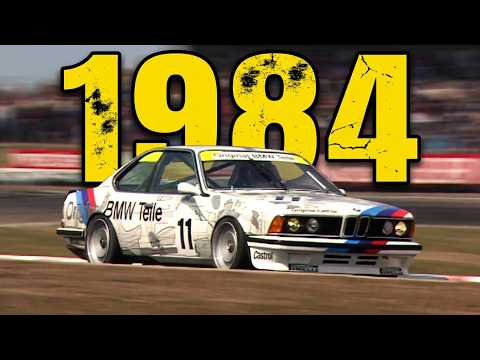
BMW 635 CSi DTM | Startup & Engine Sound at Zolder 1984

The raw sound of the legendary 1984 BMW 635 CSi Group A racing car in its first victory in the DTM at Zolder in 1984. The BMW E24 635 CS...